
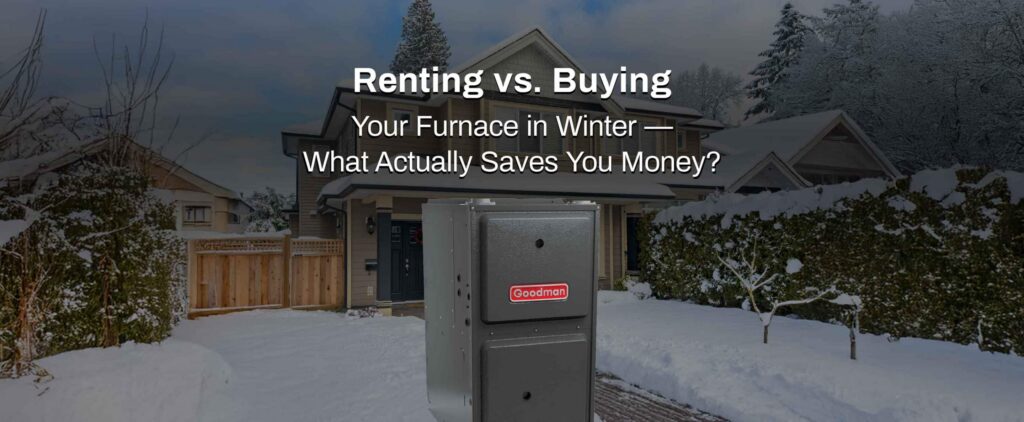
When winter temperatures arrive in Ontario, a reliable furnace is not a luxury, it is a necessity. For homeowners facing a furnace replacement, one big question often comes up: should you rent or buy your furnace?
Like many major home purchases, there are often a few payment options available, including renting, financing, or buying outright. Understanding the real costs behind renting vs. buying a furnace can help you make a smarter long term decision for your home and budget.
Below, we break down the differences, costs, and considerations so you can choose the option that makes the most sense for you.
What Is the Difference Between Renting and Buying a Furnace?
Buying a Furnace
Buying a furnace gives you the most flexibility and long term control. When you purchase a furnace, you can choose both your HVAC provider and the type of unit installed in your home.
Options typically include:
- Single stage or dual stage furnaces
- High efficiency models
- Natural gas or electric systems
When you buy your furnace, you own it outright once it is paid off. That means no ongoing monthly equipment payments, only your regular utility costs. Over the lifespan of the furnace, ownership often results in lower total costs.
Renting a Furnace
Renting a furnace usually involves no upfront installation cost. Instead, the price of the furnace is spread out into monthly payments over a long term contract.
At the end of the rental agreement, you may have the option to buy out the unit or have it removed from your home. Until then, the furnace is not yours.
While renting can feel appealing due to the low initial cost, it often results in higher long term expenses.
Renting vs. Buying: Does It Really Matter?
The decision to rent or buy goes beyond upfront pricing. It affects your total cost of ownership, future flexibility, and overall value.
Renting can be attractive when immediate cash is limited, but rental contracts often come with rising payments, limited equipment options, and significant buyout fees. Over time, these costs can far exceed the price of purchasing the same furnace outright.
Understanding your total cost of ownership is key when deciding between renting vs. buying your furnace.
Financing Furnace Payments
Not every homeowner can afford to pay for a furnace upfront, and that is completely understandable. Rental companies often promote renting as an easy short term solution.
However, many HVAC companies, including CK Mechanical, offer financing options for homeowners who want to buy their furnace instead.
In most cases:
- Financing payments are lower than rental payments
- Payments are fixed for the loan term
- You avoid annual payment increases
- You build ownership equity in your furnace
Although a small down payment may be required, financing typically saves homeowners money over the lifespan of the furnace.
Understanding Furnace Buyout Rates
Some rental agreements are marketed as rent to own, but ownership is not automatic. Many contracts require a buyout fee at the end of the term if you want to keep the furnace.
In some cases, homeowners are also charged removal fees if they choose not to buy the unit.
Buyout fees are often calculated as a percentage of the original installed cost. Average buyout rates can look like this:
- 3 years after installation: 96 percent
- 6 years after installation: 86 percent
- 9 years after installation: 74 percent
- 12 years after installation: 53 percent
- 15 years after installation: 15 percent
After years of monthly payments, these additional costs can push the total well beyond the price of buying a furnace outright.
How Interest Impacts the Total Cost
Renting includes interest costs. Furnace rentals typically carry interest rates of around 2 to 3 percent annually.
Rental agreements can last up to 15 years, meaning interest continues to add up without contributing to ownership. Financing, on the other hand, ends once the loan is paid off, leaving you with a fully owned furnace.
In most cases, purchasing a furnace through financing results in lower overall costs than renting.
Furnace Maintenance and Repair Considerations
All furnaces will require maintenance or repairs eventually.
With a rented furnace, repairs are usually covered, but it is critical to read the contract carefully. Some rental agreements include exclusions or limits on coverage.
When you buy a furnace, repairs after the manufacturer warranty expires are your responsibility. Many homeowners choose to purchase extended warranties to protect against unexpected costs.
Another way to reduce repair expenses is through regular maintenance. Some HVAC companies offer service memberships that include discounted repairs and annual inspections, which help extend the life of your furnace.
Get Professional Advice You Can Trust
Deciding whether to rent or buy your furnace is a major financial decision, especially before Ontario’s freezing temperatures set in. Getting clear, honest advice can make all the difference.
At CK Mechanical, we help homeowners get the best value for their budget when replacing furnaces and heating systems. Our team will walk you through available furnace models, efficiency options, and financing plans so you can make an informed decision.
If you are considering renting vs. buying your furnace this winter, contact CK Mechanical today to explore your options and find the right solution for your home.
CK Mechanical has provided reliable service and peace of mind for homeowners in Windsor & Essex County since 2009. All our technicians are highly experienced, qualified and trained to critically evaluate all makes and models of HVAC, plumbing and fireplace equipment and to offer the best solution for ensuring your satisfaction.